Wednesday, July 20, 2011

Final Blog Topic: What I got out of Summer Chem

For me, it was really important learning about the seriousness of water shortages and pollution on Earth. I live in a house where water is constantly available for me, even for silly things like filling up a water gun. I was aware of how poorer countries did not always recieve enough water, but I never fully realized how serious their conditions were. They have to walk miles to reach a water source, and even then the water is most likely not pure and contain harmful substances. Although people are providing clean water to them, they are charging them money they don't even have. Learning about this, and documenting how much water my household uses daily makes me feel selfish. I use water to wash my dog, that is purer than the water they drink. Summer chem helped me discover all of this, and more, and I will always remember the concepts that apply to my everyday life.

Tuesday, July 19, 2011

Unit 4: Section B Summary: 14-20


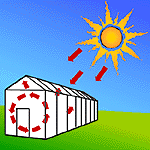
14. CO2 and water vapor in the atmosphere help maintain the earth’s surface temperature in a few ways.  During the day, when the sun’s rays beam down, the gas molecules block and adsorb a majority of the radiation, preventing the temperature on Earth from reaching high levels. During the night, the heat adsorbed by the gases in the morning is released; keeping the temperature up and not letting it get too cold.
15. Natural processes and human activity:
a.    Natural: the carbon cycle. Human: burning waste.
b.    Natural: cow matter. Human: raising livestock and refining fossil fuels.
16. Composition of atmosphere:
a.    A lower concentration of greenhouse gases would cause the earth’s temperature to increase.
b.    An increase of gas molecules would decrease the temperature of Earth because fewer radiation rays would reach the surface.
17.  A greenhouse would be warmer than a structure with opaque wooden walls because the radiation waves that enter the greenhouse cannot escape, but the ones inside the wooden walls can.
18. Greenhouse effect:
a.     A greenhouse: 
  
b.    The global greenhouse:

19. Chemical reservoirs of carbon include carbon dioxide, limestone, solid calcium carbonate, and methane.
20. Carbon atoms follow the carbon cycle, which takes them through all parts of the Earth. When carbon is released as carbon dioxide it enter the atmosphere. After being received by plants for respiration, it is now in the form of glucose and enters the hydrosphere in that form, or as carbon dioxide. The oxygen that is released by plants is inhaled by humans and exhaled as carbon dioxide (making it a part of the biosphere). It is eventually inhaled by underwater plants, or formed into limestone, which eventually decays and returns to the lithosphere. 

B.3: 1-4, page 344


1.    Ultraviolet is more harmful than infrared radiation because it has energy and power. Its most energetic form can destroy bacteria and viruses, meaning that it can cause damage to human skin.
2.    When visible radiation is beamed through the atmosphere, it is scattered causing the blue sky and red sunsets. Another use of visible light is the energy it provides for photosynthesis. This is essential because from photosynthesis we obtain oxygen, which is necessary for human life.
3.    The dryer states have a higher fluctuation in weather because of their concentration of greenhouse gases. The more humid states obviously have more water vapor, which holds in the heat from the day. The more arid states do not contain high amounts of gas molecules meaning that the beams of radiation are not blocked as well during the day, and the heat is not kept in at night.
4.     
a.    If Earth had fewer gas molecules, the daytime would be hotter because there would be enough molecules to adsorb the radiation coming from the sun, therefore increasing the temperature.
b.    On the other hand, fewer gas molecules would cause nights to be cooler. This is because there would not be enough gas molecules to hold in the heat to maintain a steady temperature during the night.


Monday, July 18, 2011

Unit 4: Section B Summary: 1-8


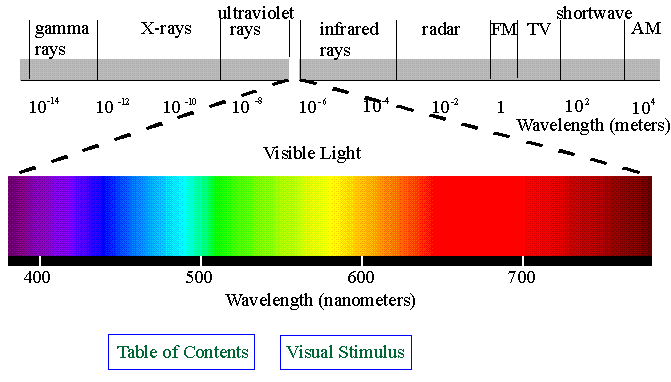
1.    The higher the frequency of electromagnetic radiation, the more energy it contains.
2.    The word “spectrum is a good descriptor because it is defined as a broad sequence of related quantities.
3.    Visible light assists photosynthesis because it can energize electrons in some chemical bonds. Infrared radiation does not contain enough energy, and ultraviolet is too harmful.
4.    Electromagnetic Radiation:
a.    Infrared radiation, visible light, and ultraviolet radiation.
b.    Infrared is basically heat energy and affects the temperatures of nonliving and living things, including Earth. Visible radiation powers plant photosynthesis, which releases oxygen into the atmosphere. Ultraviolet, in its one of its most energetic states, is linked to skin cancer, but the vitamin-D it provides is necessary for human health.
5.    Visible radiation does not provide enough energy to be able to sterilize lab goggles. Ultraviolet light, on the other hand, has photon with enough energy to break covalent bonds (in its UV-C form) therefore killing and destroying bacteria and viruses.
6.    Infrared radiation is mostly absorbed by carbon dioxide and water vapor in the atmosphere and does not reach the Earth’s surface, however, some its higher energy waves are absorbed by the earth and re-radiated as infrared energy. 90% of the visible radiation emitted from the sun reaches the earth and is scattered by water, air, and dust, casing the red sunsets and blue skies. Ultraviolet radiation in general does not reach the earth’s surface. UV-C is completely absorbed by the stratosphere, and most UV-B and UV-A radiation is absorbed by the ozone layer as well.
7.    Solar radiation that reaches Earth’s surface increases its temperature after being trapped by greenhouse gases such as carbon dioxide, methane, and nitrous oxide. Another affect is the increase of water vapor. The more radiation, the hotter it gets causing more water to evaporate and enter the atmosphere.
8.    Heat capacity:
a.    A lake will heat up more easily than asphalt because it can store more heat.
b.    The cause of this is because water has a high specific heat capacity than asphalt and other land materials. 


Sunday, July 17, 2011

Unit 2: Section D Summary: 7-13


7.    An alloy is a solid solution consisting of atoms of two or more metals. They can be created through heat and modify the properties of metals.
8.    One alloy that is used commonly is brass. This is an alloy of copper and zinc and is used in plumbing, lighting fixtures, rivets, screws, and ships. Another common alloy is pewter. Pewter is a mixture of tin, copper, bismuth, and antimony and is used for figurines and other decorative objects.
9.    Carbon is a nonmetal that is a component of both steel and stainless steel.
10. An example of a well-defined compound is Ni3Al, a nickel and aluminum metallic alloy. It has a low density, but is very strong and is used in jet aircraft engines.
11. Semi-conductors, since they are not completely non-conductive, but not entirely strong conductors, are placed in between metals and nonmetals. This is because metals are good conductors and nonmetals are not, so putting the semiconductors in between is logical.
12. Some elements commonly used for doping semiconductors are boron, arsenic, and phosphorous.
13. Semiconductors are used for electronic devices like transistors and integrated circuits for computers. They also allow computers to process digital information.